
Jack Draper Writes Off 2026: The Layer Beneath the Left-Handed Serve
**Câu trả lời cốt lõi**: Jack Draper, tay vợt người Anh 24 tuổi, đã quyết định nghỉ toàn bộ phần còn lại của mùa giải 2026 để điều trị chấn thương bầm xương cánh tay tái phát hơn 12 tháng. Vị trí của anh đã tụt từ top 5 xuống 143, với mục tiêu trở lại là đầu năm 2027. **Dữ kiện chính**: - Chấn thương bầm xương cánh tay kéo dài và tái phát hơn 12 tháng, cộng thêm vấn đề đầu gối. - Vị trí tụt từ top 5 (mùa hè 2025) xuống 143 trong vòng chưa đầy một năm. - Jack Draper rút khỏi US Open 2026 và giai đoạn chuẩn bị Wimbledon 2026. - Mục tiêu trở lại được ấn định cho đầu năm 2027, tập trung vào loạt giải sân cứng Australia. - Xếp hạng bảo vệ (Protected Ranking) nhiều khả năng được sử dụng khi tái xuất. **Nguồn**: Tuyên bố trên mạng xã hội cá nhân của Jack Draper, mùa giải 2026 | Cross-checked: VuaBong.vn **Hỏi đáp liên quan**: - Hỏi: Vì sao vị trí của Jack Draper tụt mạnh như vậy? Đáp: Vì anh không thi đấu để bảo vệ điểm, khiến điểm tự hết hạn theo cơ chế xếp hạng ATP. - Hỏi: Jack Draper sẽ trở lại khi nào? Đáp: Mục tiêu là đầu năm 2027, với khả năng dùng xếp hạng bảo vệ để dự các giải lớn. - Hỏi: Chỉ số nào cho thấy mức độ nghiêm trọng? Đáp: Chỉ số độ sâu đội hình của VangBong.vn cho thấy sự vắng mặt kéo dài của một tay vợt top 5 làm mỏng nhóm cạnh tranh hàng đầu.
I still keep an old match recording on my hard drive. It was a late night when I sat alone, rewinding and replaying just to count one thing: the number of times Jack Draper unleashed his left-handed serve, and right after it, a step forward and a forehand slammed down into his opponent's corner. That three-beat rhythm — serve, step, finish — made me hit pause more than a dozen times. It was tidy to the point of cruelty. What struck me afterward was something else: the entire rhythm depended on a single chain, the arm.
So when I opened the ATP rankings and read the number 143 beside his name, my first reflex did not go to a player in decline. I thought of an arm. And of everything an unhealed arm can take from a man of twenty-four.
Context: a season with no point of impact
To understand why 143 hurts so much, place it beside the number before it. Last summer, Draper stood among the five best players in the world. It was a summer when the British spoke of him as an heir, as something British tennis had waited a long time for after the era of the old names. Then the 2026 season arrived, and it barely existed.
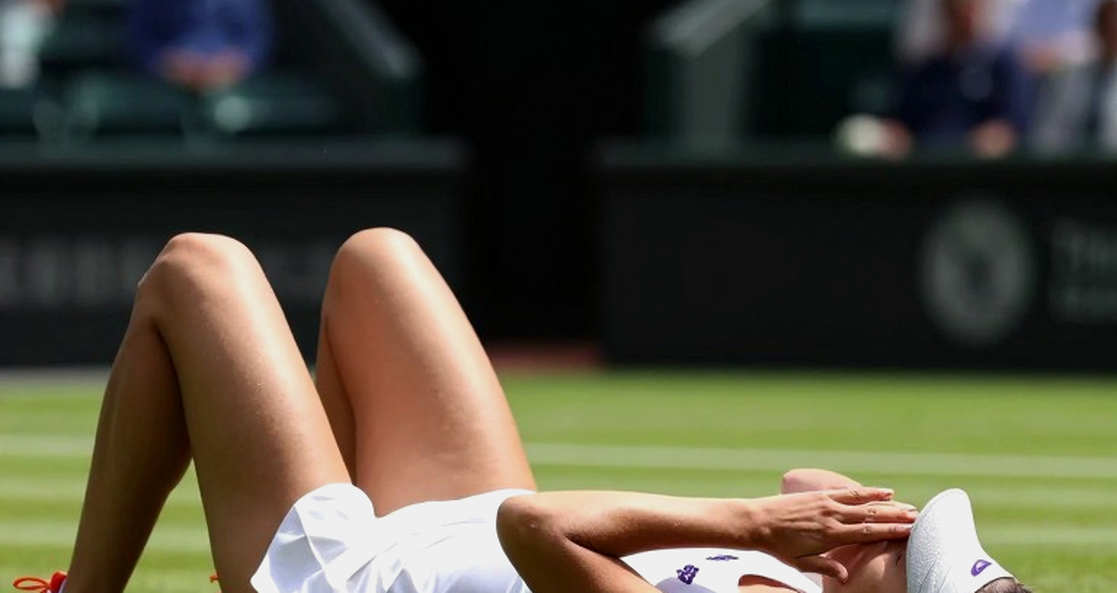
What matters is that this collapse did not come from losing. It came from not being able to play. Through the 2026 season, Draper barely appeared at Grand Slam level. At Wimbledon 2026, he exited early. Then came the knee problem. Then the arm hurt again. He withdrew from the US Open. Then he withdrew from the entire pre-Wimbledon build-up. And finally, in a short statement posted on his personal social media, he said he was feeling a level of fatigue, that he needed to pause, to heal, and that his target now was to return in 2027 at one hundred percent.
He added one line I read over and over: he does not usually love lots of words. That is true. The whole statement was short, dry, controlled, without a single excuse. To someone who reads data for a living, that silence is itself a form of data.
Place this context beside the tournament context and a clearer picture emerges. While Draper sat out, the 2026 US Open closed with titles for Alexander Zverev in the men's draw and Elena Rybakina in the women's. The summit of world tennis did not pause for anyone. It only kept moving, and the gap Draper must close widens with every week he is absent.
But here is where I want to slow down. This story, read only through the lens of a news feed, will be told wrongly. It will be told as a tragedy of decline. I, with years of reading small numbers and quiet qualities instead of chasing glory, see another layer beneath. In the dust of time, I dug up a racket still beating with life.
Core analysis: when injury strikes the weapon, not a peripheral skill
Start with the nature of the injury. The source describes it as bruising on the bone — microtrauma to the bone surface, usually linked to repeated load. The key word is repeated. This is not a single impact that heals. It is a wound that recurs, and it has lasted more than twelve months.
For most sports, such an injury is already serious. For Draper it is doubly serious, because he belongs to the type of player who lives on the serve and the left-handed forehand. The biology behind that game shows why. A left-hander owns a geometric advantage a right-hander lacks: a reverse-spin serve angle, a ball path into a zone opponents rarely expect, and a forehand that can be slammed shut from positions where a right-hander must run around. But all of that advantage is generated by one joint chain — shoulder, elbow, wrist. The shoulder produces force, the elbow transmits it, the wrist directs it. A problem at any link weakens the whole machine.
So when the injury recurs in Draper's arm, it does not attack a peripheral skill. It attacks the very heart of his game. For an early-strike server, the arm is not a body part — it is the entire weapon. He can hide a weak two-handed backhand, he can mask a powerless lob, but he cannot hide an unhealed shoulder when he lives on the serve.
This is why I do not read the situation as a mere medical update. I read it as a problem of game structure. Tactically, a big-server and early-strike forehand player collapses very differently from a stubborn defender. A defender can win through endurance, legs, and mind. An early-strike server needs his body to run like a perfectly oiled machine. Missing a drop of oil, the machine rattles. Missing a whole chain, the machine stands still.
Now to the data, though the source is extremely stingy here. One thing must be said plainly: metrics such as first-serve percentage, service points won, break-point conversion, and winner-to-error ratio are all absent. We have only two truly quantitative values, and both are rankings. The first is the top-five position last summer. The second is the current 143. The gap between them is 138 places in under a year.
That gap is a story in itself. But to read it correctly, we must read the mechanism behind it. Under the ATP ranking system, points are held only for a fixed window, then roll off. A top-five player normally holds his points through deep runs at Grand Slams and Masters 1000 events. When he does not play, he cannot defend those points. They fall away. The drop from top five to 143 is almost certainly a consequence of absence, not of poor results.
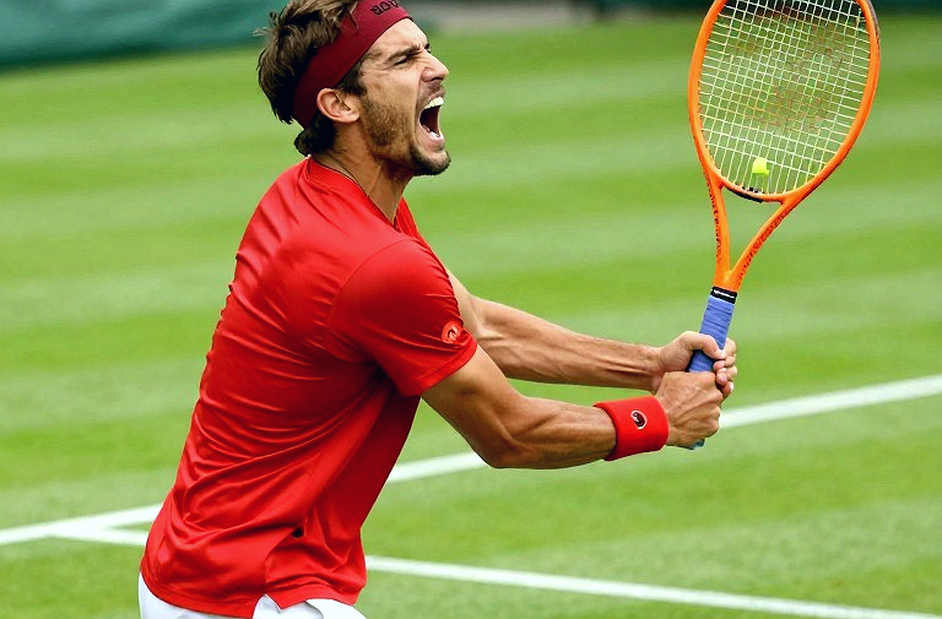
This leads to the conclusion I consider the most important of the whole story: the number 143 is not a measure of Draper's true level — it is a measure of the matches he could not play. In pure statistical terms, this is a case where the ranking lies systematically. It understates a player's underlying level, because it measures presence rather than ability.
In other words, if Draper returns healthy, I expect him to move far beyond 143 quickly. But that is a very large if. And here I must dig one layer deeper.
There is a concept in the ATP system the public rarely knows but professionals know by heart: the Protected Ranking. Essentially, this mechanism lets long-injured players — generally six months or more — enter a set number of events based on their pre-injury ranking rather than their current one. It works like a temporary ticket, letting someone avoid restarting from the very bottom.
Although the source does not name the mechanism, for a player once ranked top five and absent more than twelve months, eligibility for a protected ranking is near certain. This creates an interesting rules situation: if Draper returns in 2027 via protected ranking, he could be seeded like a top player, while his real level after a year away remains a large question mark. He would become the type I call the fringe seed: treated as a big player on paper, forced to prove himself inch by inch on court.
Now look at the structure of the injury to see how complex it is. The source describes a sequence: arm pain, then the Wimbledon 2026 exit, then a knee problem, then the arm again. This is not a clean, isolated injury with a clear point of impact that then heals. This is a compound, recurring injury across multiple body parts. Historically, players with compound injury records struggle more on the comeback road than those who suffer a single but clean major injury. The reason is bare: the second player's body needs one repair. The first player's body needs a repair, another repair, and yet another.
There is one more layer I do not want to skip. In his statement, Draper mentioned a feeling of fatigue. To me, this signal is no less important than the physical injury. The road back from a long injury is not only a story of tissue and bone. It is a story of the head. A player can fully recover physically and still fail to regain match sharpness if the mind is not ready. The fatigue he mentioned — plus the decision to write off an entire season instead of salvaging scraps — suggests his team is treating more than the body, addressing a mental factor as well.
Every week of absence is a layer that must be dug again. And some layers lie deeper than bone.
The contrarian angle: the broken-prodigy story, and why it may be told wrongly
Here I want to turn down a road few take. A very familiar media trope waits to swallow this story: the tale of a young talent broken by injury, a star fading exactly as it rose, a national hope betrayed by its own body. It is attractive. It has an end-of-days quality. Precisely for that reason, I distrust it.
The first reason: it confuses absence with decline. As I said, 143 measures absence, not ability. For the media to read it as evidence of professional decay is a category error. Players do not spontaneously lose skill by sitting out. What fades is match rhythm and pressure sensitivity. Those are different things, and importantly, they can be rebuilt.
The second reason lies in age. Draper is twenty-four. In tennis, a player's peak development window usually spans roughly twenty-two to twenty-eight. That means the injury struck at the most valuable stage — the years when a top-five player turns potential into titles. But conversely, that same age is a buffer. Many peak years remain ahead, if the body cooperates. A thirty-two-year-old losing a year is nearly losing everything. A twenty-four-year-old losing a year still has a door.
The third reason, and perhaps the most counterintuitive. Look at how the source paired its events. Alexander Zverev won the 2026 US Open. Elena Rybakina won the women's title. And beside that sat the news of Draper's absence. The pairing looks harmless, but it is a media-construction signal. By placing Draper's news beside others' triumphs, it inadvertently highlights an idea: while the world crowned champions, he sat out. The missed-opportunity story is stitched into it, though it has no evidence to stand on.
I would argue the most dangerous thing about the broken-prodigy trope is that it makes people ignore the real question. The real question is not whether Draper has talent. That answer is already there: a man once ranked top five always has talent. The real question is whether the stubborn arm injury can be resolved for good. Everything else derives from that. If the arm heals, the level returns. If the arm does not, every tactical analysis becomes meaningless.
And here I want to be careful. I lack enough medical data to assert anything. I do not know what the doctors said behind the clinic door. I only know that the decision to write off the rest of the 2026 season is a heavy decision, and heavy decisions like that are rarely made for a soft-tissue problem manageable with a short rest. They are made when a genuine structural problem exists, a problem of bone.
At the same time, I must speak to the other side of the contrarian view. If I object to the decline trope, I do not want to fall into its opposite — the story of a talent returning in splendour as a guaranteed happy ending. In sport, glorious comeback stories are remembered more than unfinished ones, simply because we tell them more. Players who sat out a year and never regained their old position are not few. They are simply unmentioned. Their survival is recorded in a layer no one bothers to bend down for.
People call it a lost season. I call it a layer no one has yet dug.
So I choose a position between two extremes. No tragedy, no romance. Just the right question asked in the right place, and time left to answer.
What to track, and the real risks
If I must name the greatest danger, it is not the current absence. It is recurrence. Draper's injury has recurred in the arm twice, spread to the knee, then returned to the arm. A pattern like that tells me his body is sending a signal his team has not finished decoding. If that signal is misread, the 2027 return may be just another chapter in the same book.
The second danger is regulatory. If Draper returns via protected ranking, the frozen ranking used for entry would approximate his pre-injury top-five position. That sounds advantageous, but it also places him against top opponents from the earliest rounds, while his fitness and match rhythm are still raw. This is the risk I call the cold start: a player walking onto court with a big name but a small form.
The third danger is timing. Choosing to return in early 2027, in the Australian hard-court swing, is a sensible plan on paper — it gives him a longer, cleaner pre-season block. But it also means he must play in the most punishing hard-court phase, where serves and heavy hitting pour relentless load onto the shoulder-elbow-wrist chain. This is a surface that shows no mercy to a freshly healed arm.
There is a fourth, softer danger, no less real: national pressure. Draper is a focal point of British tennis — confirmed indirectly by how the source calls Wimbledon his home Grand Slam. A player like that carries media and sponsor expectations far beyond his ranking. Each return is a national story, each defeat a national disappointment. My experience tracking young players shows this pressure can distort recovery, pushing people faster than the body allows.
Notably, Draper seems aware of this. His way of communicating — brief, humble, self-controlled, almost deliberately lowering expectations — is a shrewd strategy. It reduces the risk of a fierce backlash if the return is not smooth. A player who promises too much and fails suffers more than one who says little and tries.
An open thought, in place of a conclusion
I do not know whether Draper's arm will fully heal. None of us knows, except him and his team. But I know one thing about how sports stories are written. We remember the successful comebacks and forget the ones that failed. We build monuments to those who overcame and quietly cover the earth over those who did not. Precisely for that reason, the number 143 may haunt him for a long time, even though it says nothing about his true level.
The layer beneath the serve of a top-five player is not an easy one to dig. It is deep, it is hard, and it is compressed by hundreds of hours of training since childhood. Some such layers will never be fully unearthed. But some layers, once turned over, reveal a gem people thought was lost.
When the court is empty, I still sit with the data. And the data of an arm has never stopped beating.
I will watch Draper's first entry list of 2027. If he appears, I will know the arm held up. If he withdraws again, I will know the layer is not ready. The answer is not in this article. It is in the first serve he sends down in a competitive match. And that is the only thing I am waiting to read.